Thursday, March 12, 2015

Fahrenheit 451 theme handout

Theme Four Handout
Alana Goukler, Aiswarya Ravikumar, Andrew Wahl, Sydney Hood, & Elyse Miller

Theme Statement:
Engaging with difficult, uncomfortable thoughts and experiences is the only route to true happiness.

Timeline

Quotes
They walked the rest of the way in silence, hers thoughtful,his kind of clenching and uncomfortable silence ..” (Bradbury 7)
“ ‘See what you’re doing? You’ll ruin us! Who’s more important, me or that Bible?’ She was beginning to shriek..” (Bradbury 72)
“And when it came to his turn, what could he say, what could he offer on a day like this, to make the trip a little easier.” (Bradbury 158)

How does our theme connect to today’s society?
Our theme connects to today’s society through the idea of censorship and government control, as a major issue in the U.S. today is that many programs and organizations  such as the NSA are making many people feel that the government has an excessive amount of power.

Why is our theme important to the understanding of the story?
The theme helps the readers to comprehend Montag’s emotions throughout the story, from the beginning to the end and allows us to better understand the actions that he took in regards to various characters and situations.


Wednesday, March 11, 2015

Fahrenheit 451 : Symbols

        . The Hearth and the salamander is a important symbol in this book. Both of these symbols have to do with fire, the dominant image of Montag’s life. The hearth because it contains the fire that heats a home, and the salamander because of ancient beliefs that it lives in fire and is unaffected by flames. The hearth, or fireplace, is a traditional symbol of the home; the salamander is one of the official symbols of the firemen, as well as the name they give to their fire trucks
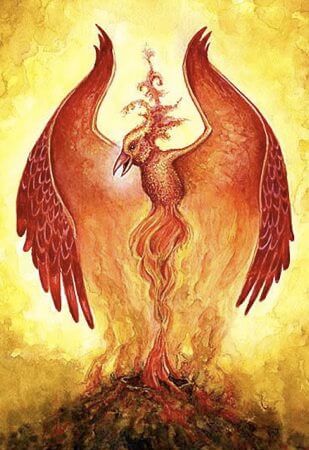
           The phoenix also is a major symbol. After the bombing of the city, Granger compares mankind to a phoenix. Phoenix is a bird that burns itself up and then rises out of its ashes over and over again. Remembering the mistakes of the past, Granger and the group have set a mind that they will rise up one more time. They believe that individuals are not as important as the collective mass of culture and history. The symbol of the phoenix’s rebirth refers not only to the cyclical nature of history and the collective rebirth of humankind but also to Montag’s spiritual resurrection.

Sunday, March 8, 2015

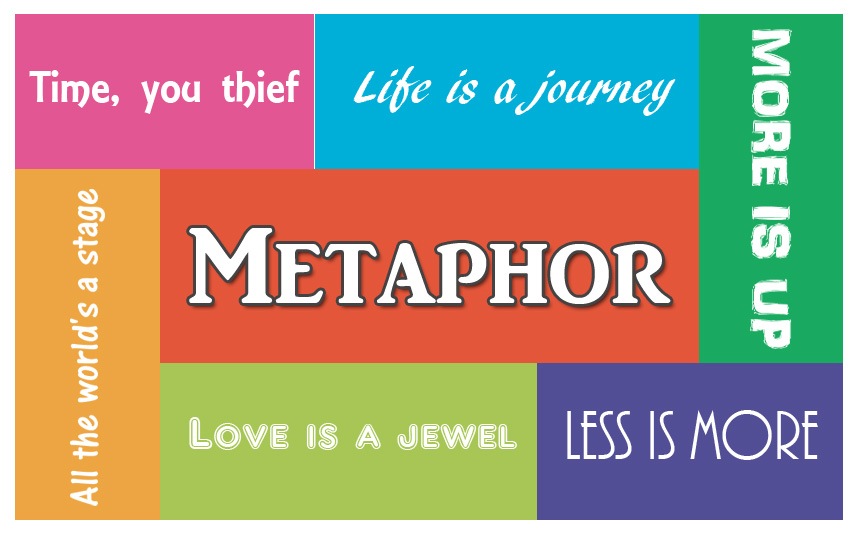
The fault in our stars: Metaphors

         Augustus and Hazel, frequently use metaphors to talk about emotionally overwhelming subjects. For example, Augustus describes shooting “existentially fraught” free throws on the day before the amputation of his leg. The free throws in this instance become a metaphor for Augustus's sense of purpose, since prior to his amputation he was an all-star basketball player, and losing his leg meant an end to sports. He suddenly began to question why this activity was so important, but the implication is that he suddenly began wondering what his purpose might be more broadly. 
            He often keeps an unlit cigarette in his mouth in order to symbolize his control over a thing that can kill him, namely cancer. Augustus relies on the significance of the cigarette symbol to give him strength in times of fear and uncertainty. Hazel has her own frequently used metaphor. She likens herself to a grenade when she imagines the pain she will cause to her loved ones when she dies. In each instance the metaphor allows the character to deal with the subject at hand, Hazel's impending death for example, without having to call it by name.


Thursday, January 15, 2015

About John Green: The Fault in our stars


I am reading the book fault in our stars by John Green. John Green is an author of young adult fiction and a YouTube blogger. He is also a #1 Best Selling author on the New York Times Bestseller list. He was born on August 24, 1977 in Indianapolis,Indiana. He grew up in Florida. He graduated from Kenyon College in 2000 with a double major in English and Religious Studies. Green lived for several years in Chicago, where he worked for the book review journal Booklist as a publishing assistant and production editor while writing Looking for Alaska. While there, he reviewed hundreds of books, particularly literary fiction and books about Islam or conjoined twins. He has also critiqued books for the New York Times Book Review and written for National Public Radio's All Things Considered and WBEZ, Chicago's public radio station. He lived in New York City for two years while his wife attended graduate school. 
                 John Green's first novel was Looking for Alaska (based on his own boarding school experience) and won the 2006 Michael L. Printz Award presented by the American Library Association, and made the ALA 2005 Top 10 Best Book for Young Adults. His second novel, was An Abundance of Katherines , and was a 2007 Michael L. Printz Award Honor Book, a finalist for the Los Angeles Times Book Prize, and may also be made into a movie in the future.Green's third novel, Paper Towns , debuted at number 5 on the New York Times bestseller list for children's books, and the movie rights to Paper Towns have been optioned, with Green hired to write the screenplay. Paper Towns was awarded the 2009 Edgar Award for Best Young Adult Novel and the 2010 Corine Literature Prize.
                    

Thursday, November 20, 2014

About the Author: Paul Zindel

I started reading another book called "A Begonia for miss Applebaum" by Paul Zindel. Paul grew up in Staten Island. Zindel graduated from high school and left home once again, this time to attend Wagner College in Staten Island. Zindel did not receive a degree in English, literature, or writing, but in 1958, received his bachelor's degree in chemistry and education. In 1959 he also completed a masters of science degree in chemistry. Following college, Zindel found work as a technical writer for a chemical company. In his free time, he continued to write plays such as Dimensions of Peacocks and A Dream of Swallows. In the early 1960s, both plays ran on stage in New York City.

Throughout the 1970s and 1980s, Zindel continued writing books for teenagers. In 1964, he wrote The Effect of Gamma Rays on Man-in-the-Moon Marigolds, his first and most successful play. The play ran off-Broadway in 1970, and on Broadway in 1971, and he received the 1971 Pulitzer Prize for Drama for the work. It was also made into a 1972 movie by 20th Century Fox. Zindel wrote 39 books, all of them aimed at children or young adults.
Many of these were set in his home town of Staten Island, New York. They tended to be semi-autobiographical. Zindel himself grew up in a single-parent household, his mother worked at various occupations: hat check girl, shipyard worker, dog breeder, hot dog vendor, and finally licensed practical nurse, often boarding terminally ill patients at home. They moved frequently. His father abandoned them. This upbringing was most accurately depicted in Confessions of a Teenage Baboon. He died in 2003 from lung cancer in Manhattan.

Tuesday, November 4, 2014

Book to Society Connection

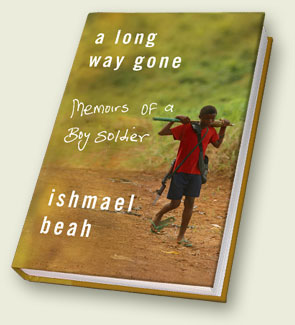
My second memoir is "A long way gone" by Ishmael Beah. The main or the central idea in this memoir is struggle and parting away from the family. Generally in life we have gone through struggles but the character in this memoir has gone through a different type of struggle. The character goes through different stages of struggle and parting from the family.


Basically the story is about the life of Ishmael Beah who lives a fairly happy life in Sierra Leone until civil war breaks out. Then, like other civilians, he is forced to run for his life, becoming separated from his family. He tries to travel from village to the next trying to find them. But unfortunately the rebels had murdered them.He later finds a way to be rehabilitated and regain his childhood. He once again learns how to love.

http://www.penguin.com.au/products/9780670077045/long-way-home

The link above takes you the article and a video that is below the article of a similar boy who gets parted from his family but finds his way back home after 25 years. This is an author who has written a memoir about this parting and reuniting of his family. The author's name is Saroo Brierley. At only five years old, Saroo Brierley got lost on a train in India. Unable to read or write or recall the name of his hometown or even his own last name, he survived alone for weeks on the rough streets of Calcutta before ultimately being transferred to an agency and adopted by a couple in Australia. Despite his gratitude, Brierley always wondered about his origins. Eventually, with the advent of Google Earth, he had the opportunity to look for the needle in a haystack he once called home and pore over satellite images for landmarks he might recognize or mathematical equations that might further narrow down the labyrinthine map of India. One day, after years of searching, he miraculously found what he was looking for and set off to find his family. A Long Way Home is a moving, poignant, and inspirational true story of survival and triumph against incredible odds. It celebrates the importance of never letting go of what drives the human spirit: hope.

Thursday, October 16, 2014

Color of Water: The Blue Bicycle!


In the book color of water then major symbol is the blue bicycle. This symbol is really important because this bicycle portrays most of Ruth's characteristics. This symbol is the central thing that go with the characters.
          The blue bicycle is a symbol that plays an important role in Ruth's life. After her second husband died, Ruth began the habit of riding her bicycle through the neighborhood in which James and his family lived. To James, this bicycle symbolized her quirkiness and his consequent embarrassment. James had always sensed his mother was "different." James gained an intimate knowledge of his mother and began to understand her as a fellow adult rather than as a son.
          The author comes to view the bicycle as symbolic of his mother's difference. The bicycle also comes to represent Ruth's desire to move forward and an escape from reality. His mother kept her twelve children constantly active so that they would learn how to be productive members of society.
           This is how the blue bicycle is very special in this memoir. This symbolizes grief. She felt some kind of a feeling riding the bicycle that was gifted to her by someone really special.